Custom Software Development in Sydney

Business systems, portals, integrations and apps for organisations whose work has outgrown spreadsheets, off-the-shelf tools, or systems that were never designed to talk to each other.
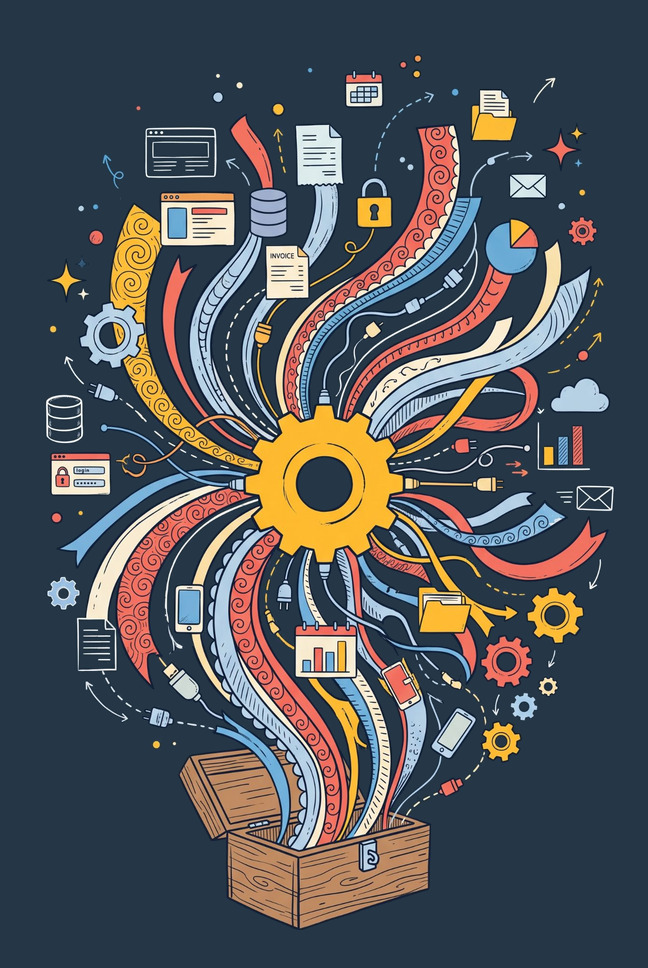
A yellow cog at the centre of a burst of ribbons and connectors, wired to business systems such as a database, invoices, a login, charts and email, rising out of an open wooden box

What counts as custom software?

Custom software is built around one organisation's way of working, rather than bought as a product that thousands of organisations share. Most of what we build is one of these, and plenty of projects are a mix.
Business Systems

Business Systems

The internal tools that run quoting, bookings, approvals, rostering or reporting, shaped to the process instead of forcing the process into a product's idea of how it should work.
Portals

Portals

A secure place where customers, members or staff log in to see their own information, make requests, upload documents or track progress.
Integrations

Integrations

Connecting the CRM, the accounting package and the website so information is entered once and arrives where it is needed, instead of being re-typed into a spreadsheet in the middle.
Web & Mobile Apps

Web & Mobile Apps

Products with their own accounts, data and logic, which go well beyond what a content website does.
AI Integrations

AI Integrations

Putting AI to work inside the systems you already run: sorting incoming requests, drafting replies and documents for a person to check, summarising long records, or answering questions from your own policies. Most of the work is in connecting it to the right data and deciding where a person stays in the loop.
Websites That Do More

Websites That Do More

Custom content management, ecommerce, member areas, booking and quoting tools, and sites that pull live information from other systems.
Digital Marketing Builds

Digital Marketing Builds

Landing pages and microsites, interactive and augmented reality experiences, email templates that render properly, and the connections between the website, the CRM and marketing automation.
Technical Scoping

Technical Scoping

Wireframes, technical specifications and a realistic estimate, done as a piece of work in its own right, so the decision to build is an informed one.
Support & Hosting

Support & Hosting

Hosting, security patches and updates, and the steady stream of small changes a system needs once real people rely on it.
The First Question

Build or Buy?

Build It When

The software would capture something that makes your organisation different.

Every off-the-shelf option forces a workaround your staff pay for every day.

Data has to be combined from several systems before anyone can use it, or the customer experience is what sets you apart.

Buy Instead When

A well-supported product already does nine tenths of what you need. Buying it will usually cost less over its life than building.

A number of our projects began with a conversation about whether to build anything at all, and ended with a smaller, cheaper piece of work joining up tools the client already had.

The trade-offs are set out in Custom Software versus Off-The-Shelf Solutions.

How Does a Project Run?

Every project follows the same four stages, whatever its size.

Scoping
A short first phase turns what you need into defined, prioritised requirements, a technical approach and a realistic estimate. It is the cheapest point in the project to change your mind, which is why scoping saves money.
1
Design and Build
The work arrives in stages you can see and use, so your feedback lands while acting on it is still cheap.
2
Testing
Our own testers check every stage before it reaches you. For systems that hold money or personal information, we scope independent penetration testing before launch.
3
Launch and Support
Software keeps needing care after it ships: security patches, updates, hosting, and the small changes a business asks for once real people use it. We explain what ongoing support pays for before you commit.
4

What Drives the Cost?

An estimate given before anyone understands the work is a guess. These four things move the number most, and once the scope is clear we are comfortable working to a fixed price.

Users and Permissions: How many different kinds of user there are, and what each is allowed to do.

Connections: How many other systems the software has to talk to.

Data to Move: How much existing information has to come across from the old system.

Compliance: Requirements around privacy, accessibility or security.

Why an Australian Studio

About Code Brewery

We are based in Sydney and build for organisations across Australia. Our working day overlaps with every Australian business day, and for the workshops that shape a project at the start, when the important decisions get made, we can be in the room or on a call, whichever suits you.

Our team covers the whole job: senior developers, project managers, quality assurance testers and digital designers, so a project does not need to be stitched together from separate suppliers. We work for businesses that come to us directly, and as the production team behind a number of creative and digital agencies.

Government and enterprise buyers can check the paperwork before the first meeting. Code Brewery is an Advanced supplier on the NSW Government ICT Services Scheme (SCM0020), and is rated Very Strong on the ProcessUnity Risk Index, the highest of its five ratings.

Stay connected With Us

Get In Touch

*Required. Please enter your full name.
*Required. Please enter your company name.
*Required. Please enter a valid email.
*Required. Please enter a valid phone number.
*Required. Please select a project type.
*Required. Please enter a message.
*Please check the reCAPTCHA box before submitting.