
Custom Ecommerce Development in Sydney
Custom online stores, checkouts, B2B ordering portals and the integrations behind them, built in Sydney for businesses whose selling has outgrown a platform template.
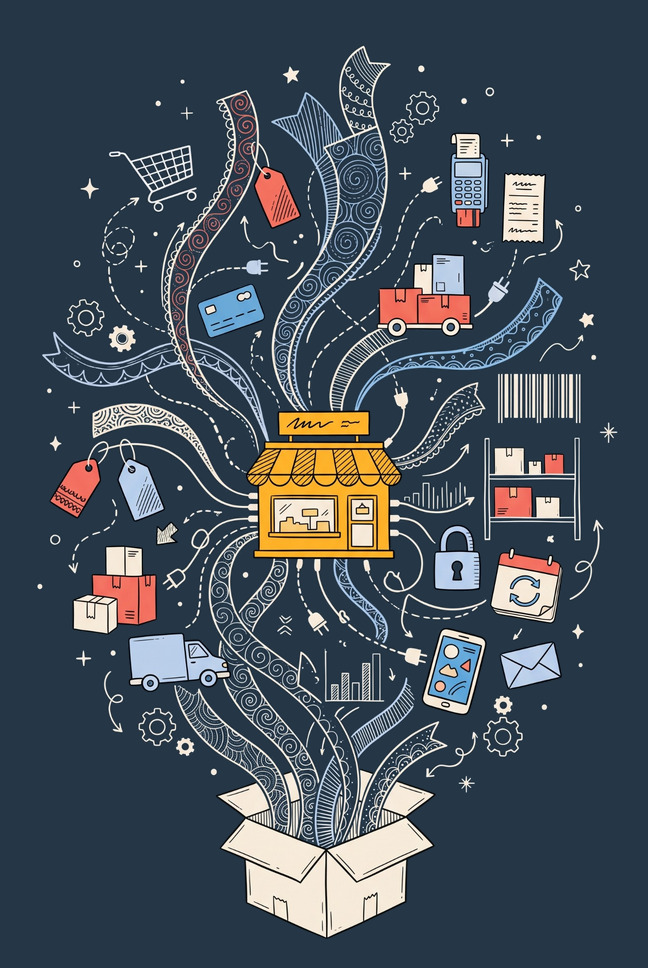

What do we build for ecommerce?

Custom Online Stores

Custom Checkout & Quoting

B2B Portals & Trade Pricing

Integrations

Subscriptions & Memberships

Marketplaces

Shopify & WooCommerce

Performance & SEO

Support & Hosting
Custom or Platform?
Custom Built
A custom store. When the way you sell is part of what makes the business different, a platform template gets in the way: trade customers with their own price lists, products configured or quoted rather than picked from a shelf, or stock held in a warehouse system the store has to respect. A store written for that keeps the logic in one place you own, instead of spread across apps that each charge monthly and update on their own schedule.
A platform with custom work around it. Shopify or WooCommerce runs the catalogue and the checkout, and code written for the job does the rest: middleware that keeps orders and stock in step with the ERP and accounting, a trade portal beside the store, or a custom checkout step. You keep the platform’s payments and hosting, and the parts particular to your business get code written for them instead of an app that nearly fits.
Off the Shelf
For a catalogue of products sold at list prices to the public, Shopify or WooCommerce set up well may be all a store needs. The monthly fee buys hosting, security and a checkout that already works on every phone, and plenty of developers know each one, so you are not tied to one supplier.
It is also the route most often assumed before anyone has asked how the business sells, which is how a store ends up running twenty apps to do work the platform was never designed for. The right route comes out of scoping, once we know the pricing rules, the systems the store has to agree with, and where the business expects to be in three years. How that decision gets made is in Pick the Problem Before You Pick the Platform, and what you give up by depending on a platform is in Building on Someone Else’s Land.
How Does an Ecommerce Project Run?
The same four stages as every project we run, with the risks particular to a store handled where they belong.

Scoping

Design and Build

Testing

Launch and Support
What Drives the Cost?
A number given before anyone has looked at the catalogue and the pricing rules is a guess. These four things move an ecommerce estimate most, and once they are clear we are comfortable working to a fixed price.

Pricing Rules: How many ways a price can change: customer group, quantity, promotion, currency, or a quote instead.

Connections: How many other systems the store has to agree with: accounting, warehouse, ERP, shipping, marketing.
Catalogue and Data: How many products and variants there are, how clean the data is, and how much history comes across from the old store.
Compliance: Payment security, privacy and accessibility obligations, which sit with the store owner whether or not the platform mentions them.
Why an Australian Studio


About Code Brewery
We are based in Sydney and build for organisations across Australia. Our working day overlaps with every Australian business day, so when a payment gateway misbehaves at nine on a Monday morning, someone who built the store is already at work.
Our team covers the whole job: senior developers, project managers, quality assurance testers and digital designers, so a store does not need to be stitched together from separate suppliers. We work for businesses that come to us directly, and as the production team behind a number of creative and digital agencies.
Government and enterprise buyers can check the paperwork before the first meeting. Code Brewery is an Advanced supplier on the NSW Government ICT Services Scheme (SCM0020), and is rated Very Strong on the ProcessUnity Risk Index, the highest of its five ratings.
Stay connected With Us
 4.9
 71


