





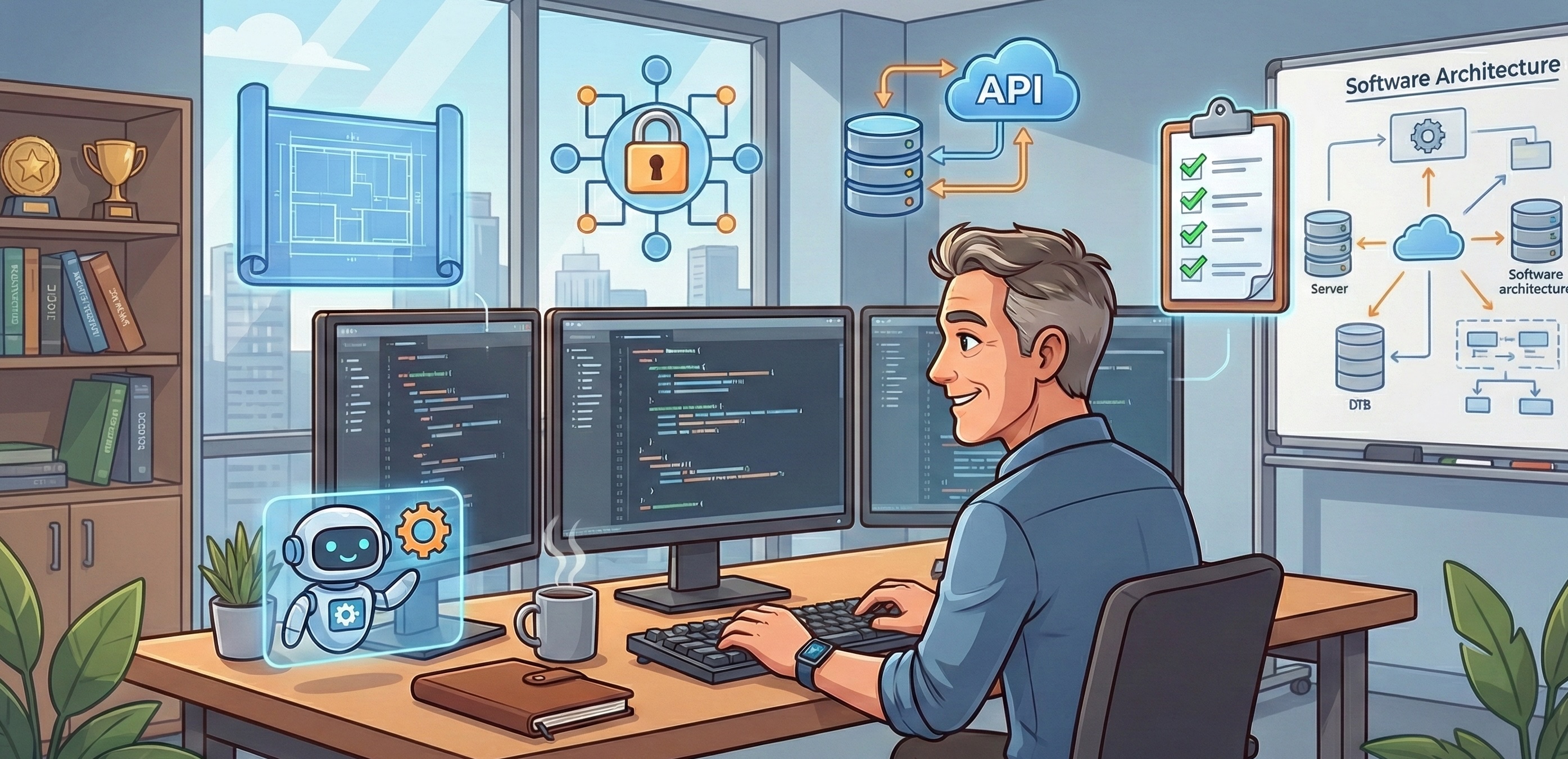
The term “vibe coding” describes a new way of building software. You tell an AI what you want, tweak the output, and ship something that works. You don’t need to understand every line of code underneath. When comparing vibe coding vs professional development, the difference comes down to one thing: expertise.
For non-developers building simple tools, this approach is genuinely empowering. However, for businesses that need reliable software, it’s worth understanding why the same AI tools produce very different results depending on who uses them.
An experienced engineer using AI assistance builds something exceptional, faster. A non-developer using the same tools builds something that might work for simple cases. The technology is identical. The expertise directing it makes all the difference.
What Vibe Coding Actually Means
Vibe coding describes an approach where the builder doesn’t fully understand the generated code. You describe what you want, check whether the output seems to work, and iterate until it does. The “vibe” is whether it feels right. It’s not whether the underlying code is sound.
For certain uses, this works fine:
Personal tools and utilities. When you’re building something for yourself, stakes are low. A script that automates a personal task doesn’t need enterprise architecture. As a result, rapid iteration without deep code review makes sense.
Quick prototypes and proofs of concept. Sometimes you just need to show an idea works. You want to test whether something is worth building properly. In these cases, speed matters more than longevity.
Learning and experimentation. For people developing technical skills, AI provides immediate feedback and working examples. Therefore, the gap between idea and working code shrinks. This helps maintain momentum while learning.
This is genuinely valuable. People who couldn’t previously build software can now create functional tools. Publications like Wired have documented this shift well. That’s democratising in the best sense.
Where Vibe Coding Falls Short
Problems emerge when projects move beyond personal use. They also appear when reliability matters, or when software needs to survive contact with real users.
The “it works” problem. Code that functions in testing can fail in production. Concurrency issues, memory leaks, security holes, and performance problems don’t show up when you’re testing locally with clean data. Without understanding why code works, diagnosing why it stopped becomes extremely hard.
The maintenance burden. Software isn’t finished when it ships. It needs updates, bug fixes, security patches, and changes as requirements evolve. Code that nobody fully understands becomes expensive to maintain. The time saved upfront gets repaid many times over in debugging.
The integration challenge. Most useful business software connects to other systems. Databases, APIs, authentication services, payment processors, existing infrastructure. Each connection point adds complexity. You need genuine understanding to handle these reliably.
The security surface. AI-generated code can include vulnerabilities that aren’t obvious. Input validation gaps, authentication weaknesses, data exposure risks. Security organisations like OWASP document these common flaws. Identifying and fixing them requires specific knowledge. “It works” and “it’s secure” are different standards entirely.
The edge case problem. Real users do unexpected things. Real data is messy. Real conditions vary. Production software needs to handle what testing never anticipated. This resilience comes from experience and careful design, not from prompt iteration.
Vibe Coding vs Professional Results: Same Tools, Different Outcomes
Here’s what’s genuinely interesting about AI in software development. The same tools produce dramatically different results depending on who uses them.
A non-developer using AI assistance can build something that works for simple cases. Meanwhile, an experienced engineer using the same AI builds something that works reliably at scale. It handles edge cases gracefully. It integrates cleanly with existing systems. It remains maintainable over time.
The difference is expertise. Understanding software architecture means knowing what questions to ask. It means knowing what patterns to apply, what risks to manage, and what “working” actually requires. AI tools don’t provide this judgment. Instead, they execute faster within whatever understanding directs them.
This is why AI assistance makes skilled engineers more productive. It doesn’t make engineering skills obsolete. The technology speeds up implementation. However, it doesn’t replace the thinking that shapes what to build and how.
What Professional Development Actually Delivers
Professional software development isn’t about typing code slowly. It’s about the expertise that shapes what gets built:
Architecture decisions. How do components connect? How does data flow? How does the system scale? How do you handle failures? These decisions determine whether software works over time, not just whether it works today.
Security by design. Authentication, authorisation, input validation, data protection, secure communications. You don’t add these at the end. You build them into how the system works from the start.
Performance under real conditions. Does it work fast enough? With enough users? With realistic data volumes? Under actual load patterns? These questions need answers before launch.
Maintainability. Can someone who didn’t write this code understand and modify it? Good documentation, testing, clear structure, and sensible conventions make this possible.
Reliability engineering. Error handling, logging, monitoring, graceful degradation. What happens when things go wrong? Not just when things go right.
AI tools can speed up every aspect of this work. They generate boilerplate, suggest approaches, flag potential issues, and handle routine tasks. What they can’t do is decide what matters for a particular project. They can’t recognise when an approach that “works” isn’t actually appropriate. And they can’t take responsibility for outcomes.
The Real Productivity Question
Some people assume AI-assisted development means you need less expertise. Actually, the opposite is closer to the truth.
AI assistance raises the productivity ceiling for experienced engineers. Work that previously took significant time for routine implementation now happens faster. This frees attention for decisions that actually require expertise. The result is better outcomes in less time. It’s not the same outcomes from less skilled people.
Therefore, the question for anyone commissioning software isn’t whether the team uses AI tools. It’s whether the team has expertise to use them well. Can they direct the tools appropriately? Can they evaluate output critically? Can they ensure results meet professional standards?
Questions That Reveal Vibe Coding vs Professional Practice
When evaluating technical work or partners, these questions help distinguish professional development from vibe coding dressed up with process:
How do you ensure code quality? What’s the review process? How do you make architectural decisions? What testing approaches do you use?
What happens when something breaks? How do you structure code for debugging? Do you have logging, error handling, monitoring? Can you diagnose and fix problems efficiently?
How does this scale? What happens with more users, more data, more requests at once? Have you considered this in the architecture? Or is it a problem for later?
What are your security practices? How do you handle authentication? Authorisation? Input validation? Data protection? Do you build these in from the start?
Who maintains this? Can someone who didn’t write the code understand it? Do you have documentation? Can you make changes confidently?
These questions reveal whether expertise directs the work. The tools involved in implementation matter less than the thinking behind them.
The Bottom Line on Vibe Coding vs Professional Development
Vibe coding is fine for what it is. It’s a way for non-developers to build simple tools for limited use cases. However, it’s not a replacement for professional software development. Spell-check helps everyone write better, but it doesn’t replace professional writers.
The AI technology that enables vibe coding also enables experienced engineers to work faster. They can tackle more ambitious projects in less time. The technology is neutral. Outcomes depend entirely on the expertise directing it.
For businesses that need software to work reliably, perform well, stay secure, and evolve over time, professional development remains essential. If anything, AI assistance widens the gap. Skilled teams can deliver more than ever. Meanwhile, the gap between amateur and professional results grows larger.
The question isn’t whether to embrace AI in development. It’s whether the people using it have expertise to ensure results worth deploying.
Need software that works beyond the demo?
Contact our team to discuss building something production-ready from day one.
Simon Paul is a Business Solutions & Technology Specialist at Code Brewery with 25+ years building software that has to work in production, not just in demos. He’s found that better tools make expertise more valuable, not less. Reach out to Simon to discuss your next project.
 4.9
4.9  69
69 


