



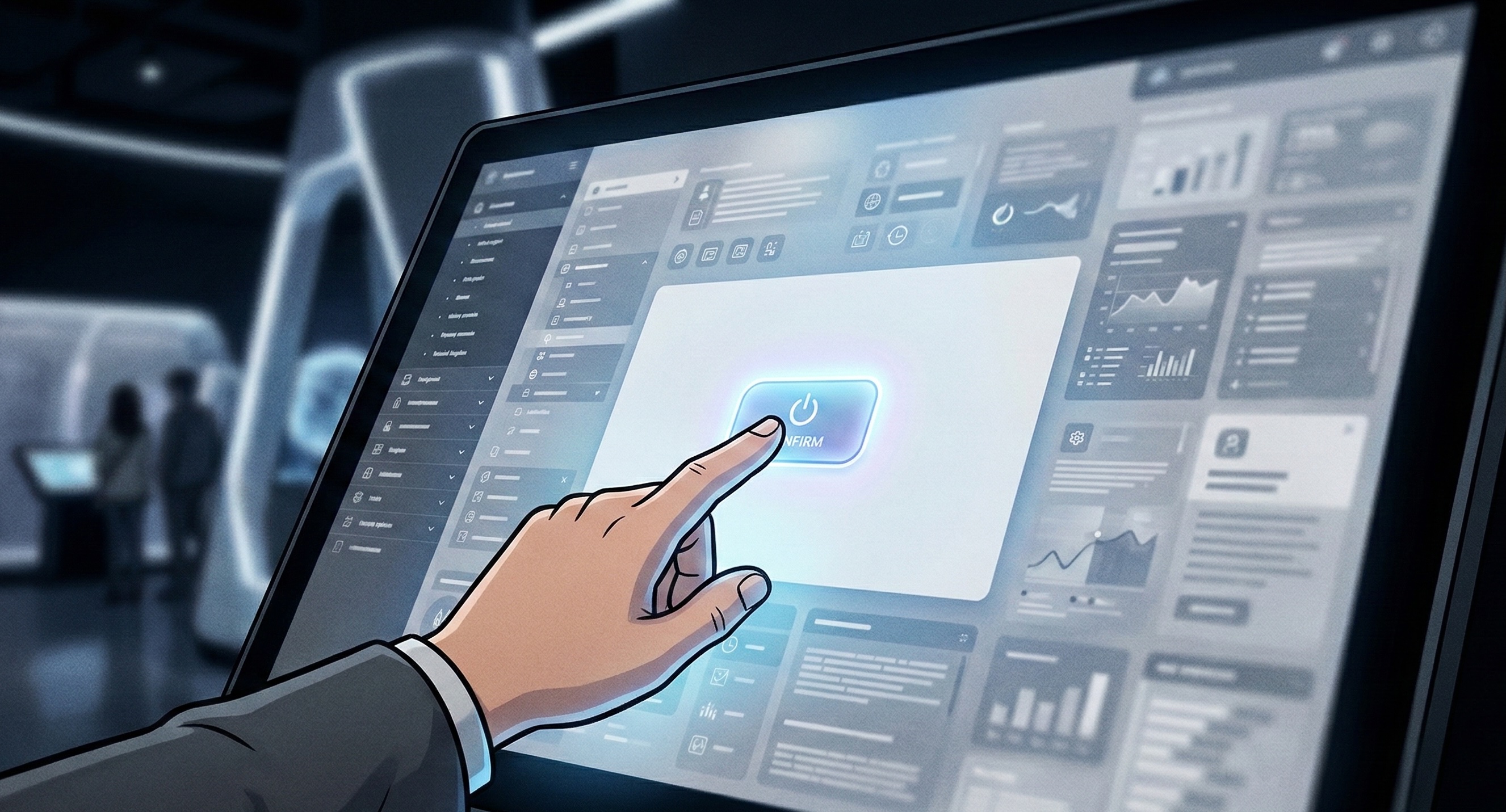
The brief says “interactive experience.” Immediately, the conversation gravitates toward complexity. Parallax scrolling. 3D elements. Gamified mechanics. Personalisation engines. The assumption is that more interactivity means more engagement.
From the build side, we’ve watched that assumption play out across hundreds of projects. And the pattern is consistent: the experiences that drive the highest engagement are rarely the most technically complex ones. They’re the ones that made one interaction feel effortless.
That’s not an argument against ambition. Some of the most rewarding projects we’ve built have been genuinely complex under the hood. But the complexity served the experience rather than defined it. And that distinction is worth exploring before committing budget and timeline to any interactive brief.
Complexity and Engagement Aren’t the Same Thing
There’s a natural temptation to equate technical sophistication with user value. A richer feature set should mean a richer experience, right?
In practice, the relationship is more like a curve than a straight line. Engagement rises with added interactivity up to a point, then starts to decline as cognitive load increases. Users don’t abandon complex experiences because they’re not impressed. They abandon them because they’re not sure what to do next.
We’ve seen this play out in measurable ways. Campaign microsites with a single, clear interactive mechanic consistently outperform feature-rich experiences on completion rates. Not by small margins. Often by multiples.
The experiences that underperform typically share a common trait: they were designed to showcase capability rather than solve a user problem. The technology is impressive. The execution is polished. But the person on the other end didn’t have a clear reason to engage beyond curiosity, and curiosity has a short half-life.
Three Principles We’ve Seen Work
These aren’t rules. They’re patterns we’ve observed across projects where engagement metrics significantly exceeded expectations. The creative thinking behind each project was different. The technical implementation varied. But these three things were consistently present.
1. One clear action, immediately obvious.
The most engaging experiences we’ve built share a common trait: within three seconds of landing, the user knows exactly what they’re supposed to do. Not because the interface is simple, but because the primary interaction is unmistakable.
This is harder to achieve than it sounds. When a brief includes multiple engagement goals, the temptation is to present them all simultaneously. Filter by category. Watch a video. Explore a product. Share on social. Each individually valuable. Together, they create decision paralysis.
The experiences that perform best establish a single entry point. Everything else is available but secondary. The user engages with one thing, gets a result, and then discovers what else is possible. The architecture supports depth, but the surface is focused.
From a build perspective, this principle also tends to produce more robust experiences. A focused interaction can be optimised, tested, and refined more effectively than a broad feature set competing for attention and resources.
2. Immediate, visible response to every input.
The gap between action and feedback is where engagement dies. When a user taps, scrolls, drags, or clicks, something needs to happen instantly. Not after a loading spinner. Not after a page transition. Instantly.
This is where technical implementation directly shapes the creative experience. Animation timing, transition smoothness, and response latency aren’t polish items to add at the end. They’re fundamental to whether the interaction feels alive or sluggish.
We’ve found that teams who define the feel of interactions early, before visual design is finalised, build experiences that are more engaging than teams who add animation as a final layer. The feedback loop between input and response is the experience. Everything else is context.
The technical investment here is in performance: optimised assets, efficient rendering, and architecture that prioritises responsiveness over feature volume. It’s not glamorous work, but it’s the difference between an experience that feels crafted and one that feels like a website.
3. Reward progress, not just completion.
Long-form interactive experiences lose users at predictable points: wherever the next step feels uncertain or the payoff feels distant. The solution isn’t to make experiences shorter. It’s to make progress feel continuous.
Small acknowledgements along the way, a visual change, a revealed piece of content, a shift in the environment, maintain momentum far more effectively than saving the payoff for the end. Users who feel like they’re getting somewhere keep going.
This applies to everything from product configurators to interactive storytelling to campaign microsites. The mechanic varies, but the principle is consistent: frequent small rewards sustain engagement better than one large one.
From a technical standpoint, building for progressive reward means architecting content delivery in stages rather than loading everything upfront. It’s better for performance and better for engagement, which is a rare alignment of technical and creative interests.
Where Complexity Does Belong
None of this means interactive experiences should be technically simple. Some of the best work happens when significant complexity sits beneath a deceptively simple surface.
A product configurator that feels effortless to use might involve real-time 3D rendering, dynamic pricing calculations, and inventory integration behind the scenes. A personalised campaign experience that feels intuitive might rely on sophisticated data processing to deliver the right content to the right user.
The complexity serves the experience. The user never sees it, and shouldn’t need to. The technical sophistication is in making something inherently complex feel natural and immediate.
That’s where the build team’s contribution is most valuable. Not in adding visible features, but in making the intended experience perform flawlessly across devices, connections, and usage patterns that the user never thinks about.
The Conversation Worth Having
When an interactive brief arrives, the most productive early question isn’t “what features should it have?” It’s “what’s the one thing we want people to do, and how do we make that feel brilliant?”
Everything else, the depth, the secondary features, the progressive complexity, builds from that foundation. Start with a focused, responsive, rewarding core interaction, and expand outward. Start with a feature list, and the experience often struggles to find its centre.
That’s a creative decision, not a technical one. But it’s a decision that technical perspective can inform. Understanding what performs well in browsers, what feels responsive on mobile, and where technical investment creates the most perceptible improvement helps creative teams make choices that translate into experiences users actually complete.
The best interactive work we’ve been part of started with a clear creative vision and a conversation about how to make it feel right in the medium where it would live. That conversation is always worth having early.
Planning an interactive experience?
Contact our team to discuss how to make the interaction feel as good as the concept looks.
Simon Paul is a Business Solutions & Technology Specialist at Code Brewery who’s spent 25+ years building interactive experiences that have to work in the real world, not just in presentations. He’s found that the most engaging digital experiences are usually the ones that made one thing feel effortless. Reach out to Simon to discuss how your next interactive concept might come to life.
 4.9
4.9  71
71 


