



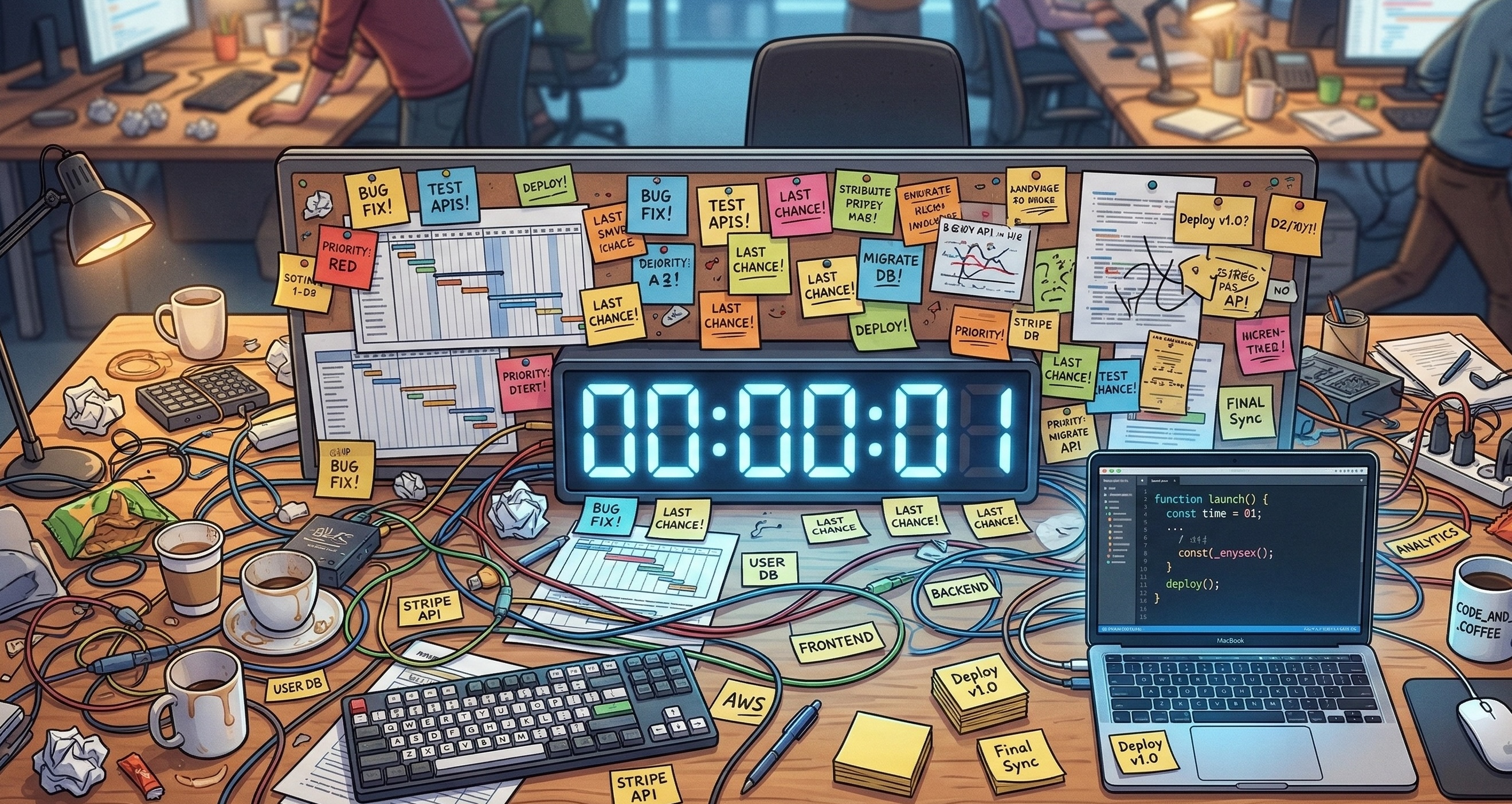
Every campaign has that moment. The deadline is locked. The media buy is committed. The client has signed off on creative. And somewhere in the background, the development team raises a concern about something that isn’t quite right under the hood.
The response is understandable: “Just launch it. We’ll fix it after.”
From the business side of the table, that call often makes sense in the moment. The campaign needs to go live. The media spend is already running. Delaying isn’t an option. We get it. We’ve been on the other end of that conversation hundreds of times over 20 years of building campaign technology.
But here’s what we’ve observed from the technical side: the cost of “fix it after” in campaign work compounds differently than it does in product development. And understanding why can save significant time, budget, and stress on future projects.
Why Campaigns Are Different
In traditional software development, technical debt accumulates gradually. Teams can plan sprints to address it. There’s usually a roadmap that accounts for refactoring and improvement cycles.
Campaigns don’t work that way. They operate under a fundamentally different set of pressures.
Fixed deadlines that don’t move. A product launch can shift by a week. A campaign tied to a media buy, an event, or a seasonal moment cannot. When the deadline is immovable, shortcuts become inevitable.
Temporary by design. Campaign technology is often built with the assumption that it won’t need to last. That assumption is correct right up until the client asks to extend it, reuse it for another market, or build the next phase on top of it.
Multiple integration points under pressure. A typical campaign activation might connect to a CMS, analytics platform, media tracking pixels, third-party APIs, and sometimes physical installations like DOOH screens or in-store kiosks. Each integration point is a potential failure under load, and each one was probably connected in the fastest way possible to hit the deadline.
Teams disperse after launch. The people who built the campaign often move on to other projects immediately. When something breaks two weeks later, or when the client wants phase two, the institutional knowledge of how everything fits together has already scattered.
What “Fix It After” Actually Costs
The phrase suggests a small, contained task waiting neatly for attention after launch. In practice, it tends to look more like this.
The monitoring gap. Campaign technology that launched with shortcuts often lacks proper error logging and monitoring. The team built the visible features but didn’t have time for the invisible infrastructure that tells you when something is failing quietly. Problems don’t announce themselves. They accumulate until a user or client notices, usually at the worst possible moment.
The scaling surprise. Load testing is frequently one of the first things dropped when timelines compress. The platform works fine in staging with 50 concurrent users. On launch day, when media drives 5,000 concurrent sessions, the architecture choices made under pressure become very visible. We’ve seen campaign platforms that performed perfectly in testing hit response times of 30 seconds or more once real traffic arrived.
The extension tax. When a client says “this worked brilliantly, let’s extend it for three more months and add two new markets,” the team discovers that the shortcuts taken to hit the original deadline now need to support requirements they were never designed for. What would have been a straightforward extension becomes a partial rebuild, often under the same timeline pressure that created the shortcuts in the first place.
The handover problem. If the original team isn’t available for the extension or phase two, a new team needs to understand what was built and why. Shortcuts that made perfect sense to the people who made them under deadline pressure are rarely documented. The new team spends significant time reverse-engineering decisions before they can safely make changes.
What We’ve Observed Works Better
This isn’t about eliminating shortcuts. That’s not realistic in campaign work, and anyone who’s worked in this space knows it. The question is which shortcuts are relatively safe and which ones tend to create expensive problems later.
Invest the time in monitoring, even when cutting other corners. If you can only protect one piece of infrastructure during a compressed build, make it the ability to see what’s happening in production. Error logging, performance monitoring, and alerting cost relatively little time to implement but save enormous amounts of diagnostic effort when something goes wrong at 2am on launch night.
Have the “what if this needs to extend” conversation early. Not every campaign will extend. But when the brief arrives, spending 30 minutes discussing “what would phase two look like?” with the technical team can influence early architecture decisions that cost almost nothing upfront but save weeks of rework later.
Document the shortcuts. This sounds obvious, but it almost never happens in the rush to launch. Even a brief list of known compromises and their potential implications gives future teams a starting point that’s infinitely better than discovering problems through troubleshooting.
Build the critical path properly, shortcut the edges. The core user journey, the primary data flows, and the key integration points deserve proper architecture even under tight timelines. Visual polish, secondary features, and nice-to-have functionality are safer places to compromise. When something breaks in the critical path, the whole campaign is down. When a secondary feature has a rough edge, it’s an inconvenience.
Factor technical debt into campaign budgets. This is the one that often gets missed in scoping. If a campaign is likely to extend or evolve, building 10 to 15 percent contingency for post-launch technical work is significantly cheaper than discovering the debt during a phase two build when timelines are already committed.
The Pattern We Keep Seeing
The most expensive campaigns we’ve observed aren’t the ones with the biggest initial budgets. They’re the ones where phase two cost more than phase one because nobody planned for the technical reality of extending something that was built to be temporary.
The conversation worth having before committing to a build timeline isn’t “can you launch by this date?” (the answer is almost always yes). The better question is “what are we trading off to hit this date, and what will that cost us if the campaign succeeds and the client wants more?”
That’s not a reason to delay. It’s a reason to make informed decisions about where to invest build time and where to accept calculated risk. The agencies we’ve seen manage this best treat their technical partners as part of the planning conversation, not just the execution phase.
The Bottom Line
“Just launch it” isn’t always the wrong call. Sometimes it’s exactly the right call. The cost of missing a launch window often exceeds the cost of carrying some technical debt into production.
But treating it as a free decision, one with no downstream consequences, is where budgets start to compound. The shortcuts that feel like savings during the build phase have a tendency to reappear as costs during the maintenance, extension, and evolution phases.
Understanding that pattern doesn’t slow campaigns down. It makes the trade-offs visible so everyone involved can make better decisions about where to invest time and where to accept risk. And that’s a conversation that works best when technical partners are in the room early.
Planning a campaign with a tight deadline?
Contact our team to discuss how to balance speed with sustainability from day one.
Simon Paul is a Business Solutions & Technology Specialist at Code Brewery who’s spent 25+ years navigating the intersection of creative ambition and technical reality. After watching hundreds of campaigns launch, extend, and evolve, he’s developed a practical view of where technical investment pays off and where calculated shortcuts make sense. Reach out to Simon to discuss how your next campaign can balance speed with sustainability.
 4.9
4.9  71
71 


